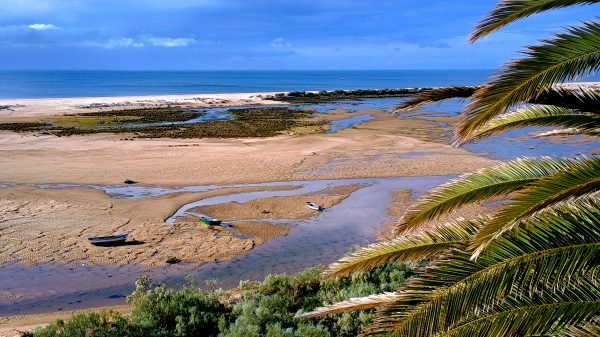
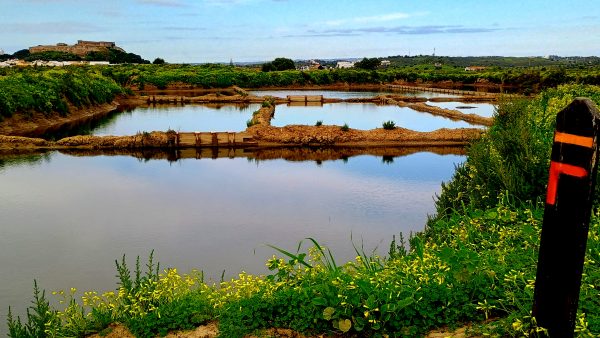
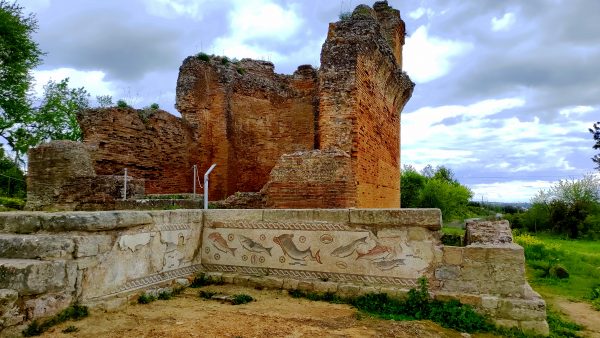
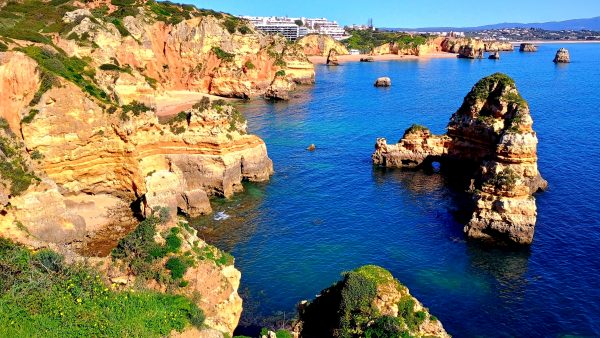
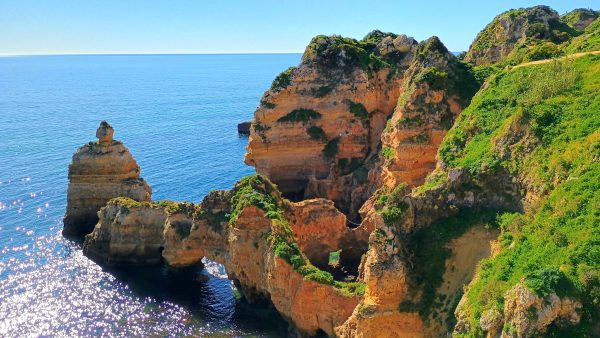
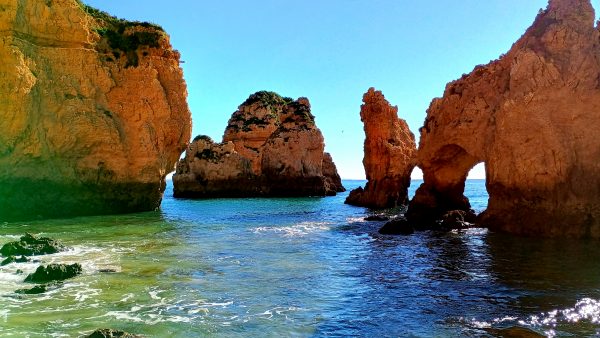
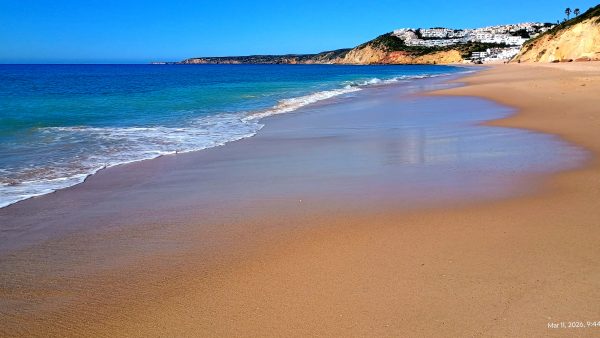
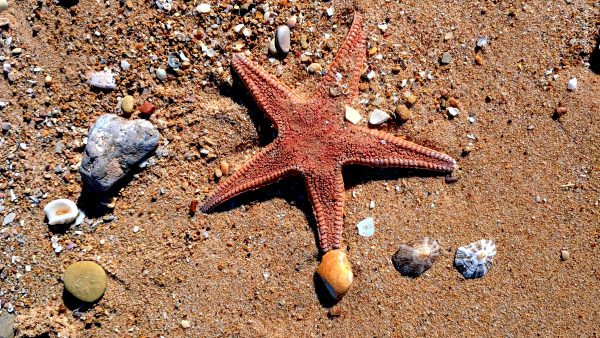
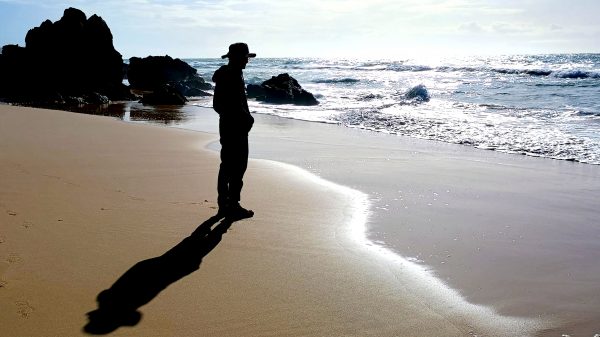
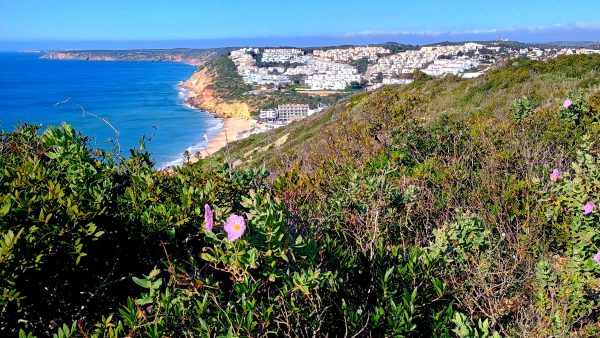
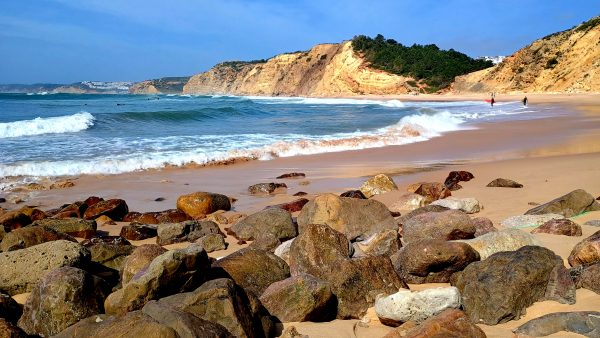
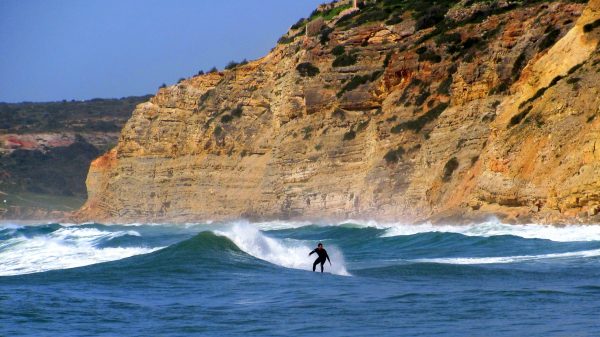
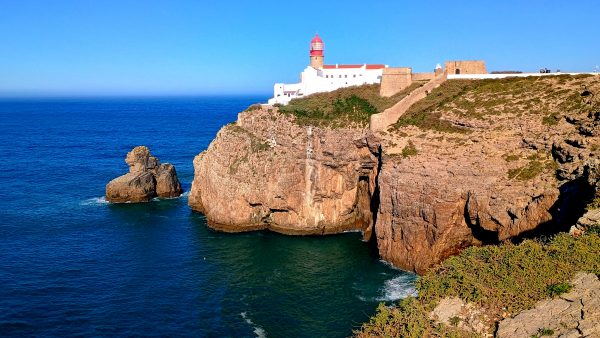
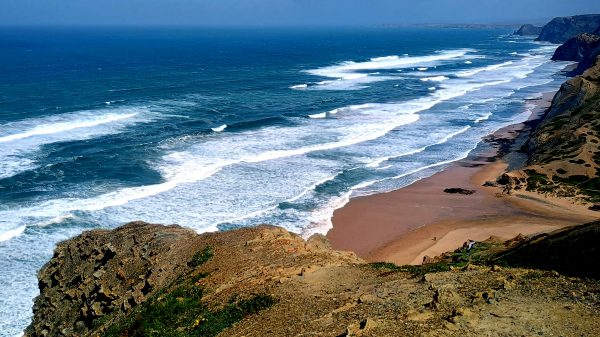
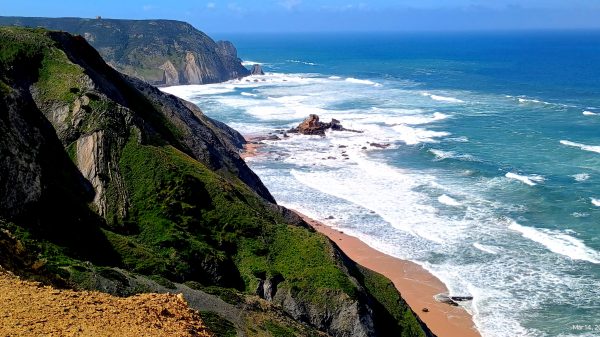
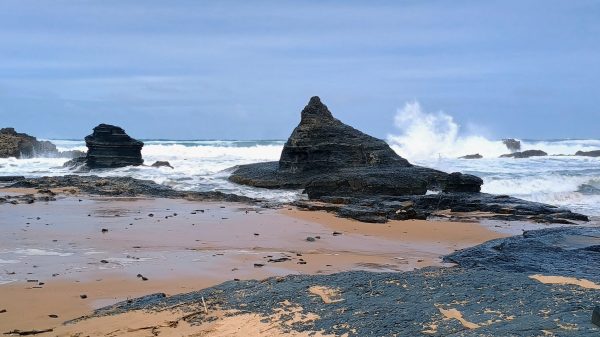
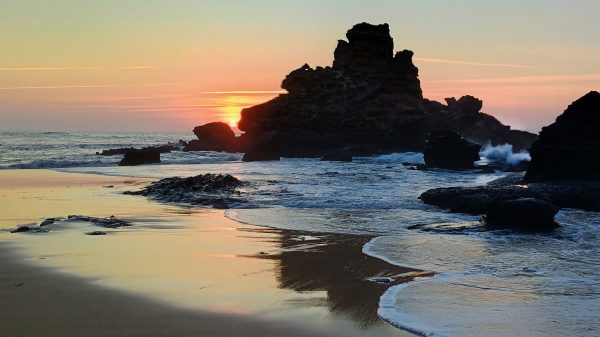
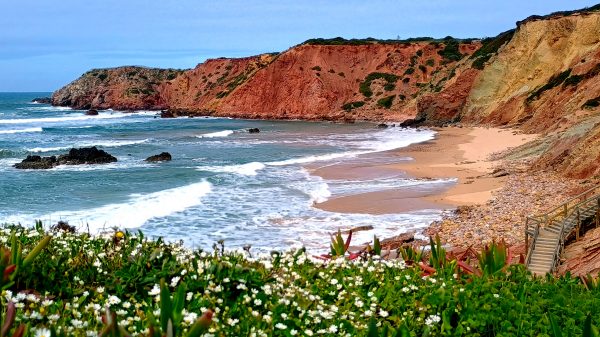
Our first view of the Atlantic Ocean from the Portuguese coast was at Cacela Velha — low tide creates a river that separates us from the sea.We walked around the Sea Salt lagoons at Castro Marim. As the temperature warms in the Spring, the water will evaporate and by Fall, sea salt will be ready for harvesting: a process that has been on going for millennium.Ruins de Milreu — a Roman farm that pays homage to the sea in all the colorful fish mosaics.The town of Lagos has a wonderful sea cliff walk called Ponta da Piedade.Fascinating eroded rock formations at every turn!Stairs take you down to some of the shore areas where you can appreciate the size of the rock outcroppings and arches. Ponta da PiedadeSalema is our home base — looking back at the village from their wonderful clear beach at low tide……tho there are some treasures to be found!About a mile walk to the west of Salema — where dinosaurs used to roam — is a small secluded beach to enjoy the surf.A longer walk to the east of Salema we climbed over this cliff headlands to another beach……and over yet another cliff is this popular beach — which we enjoyed hanging out a bit……to watch the surfers! Very big waves — persistence to capture this shot!The furthest southwest point in Europe is Cape St Vincent — with a of course a lighthouse. We also toured around the fort at Sagres which is on the adjacent cliff.A little further north along the coast is Praia da Cordoama — where a river joins the ocean. The layers of waves coming into shore and the endless kilometers of cliffs were captivating.Looking the other direction at Praia da Cordoama we were mezmorized with the emerald greenery draping off the rocks. That looks enticing……We drove down and walked the sandy beach enjoying the sea spray on our faces while watching the waves crash into the rugged shore. Praia da CordoamaWe should go back to enjoy a sunset! Ha – thought we could be by the ocean without a sunset…Further north at Carrapateira — the geology changed to gold and red cliffs! So much diversity along this rugged coast!
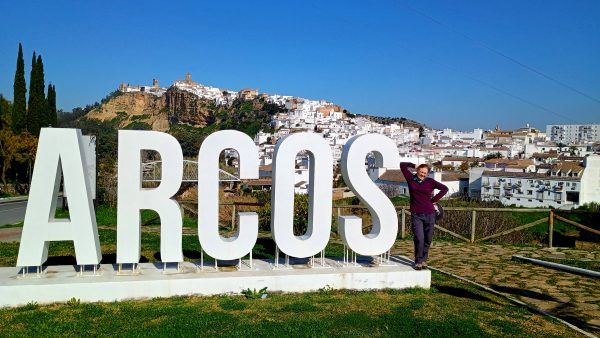
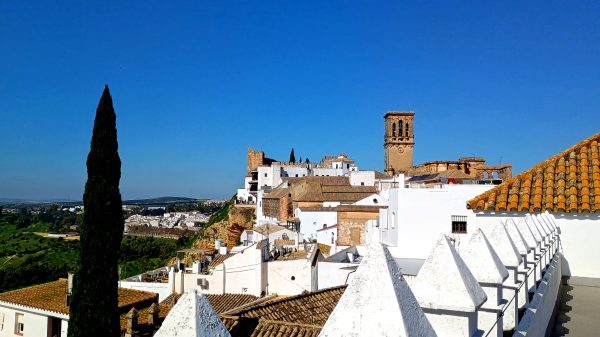
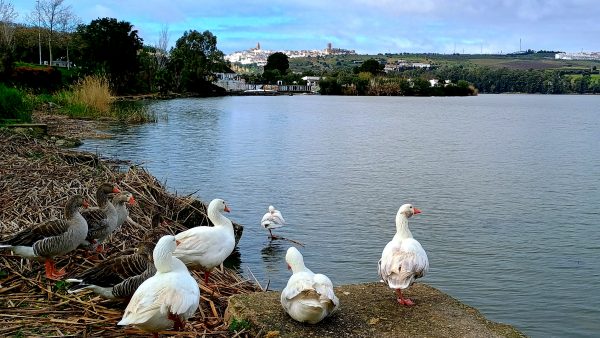
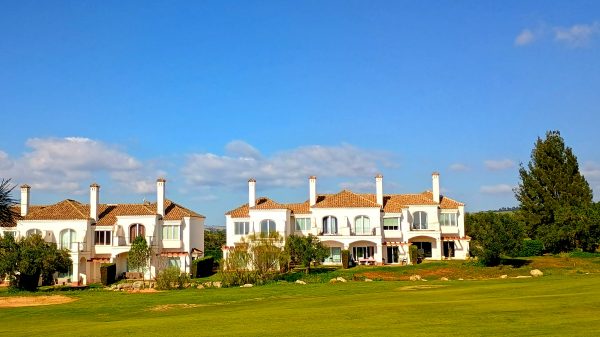
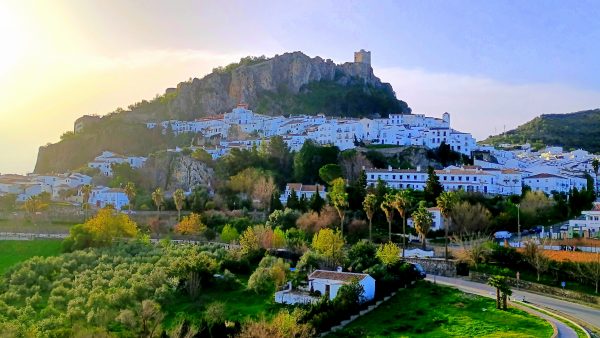
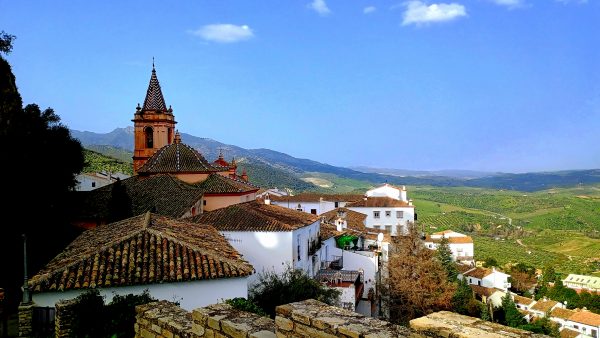
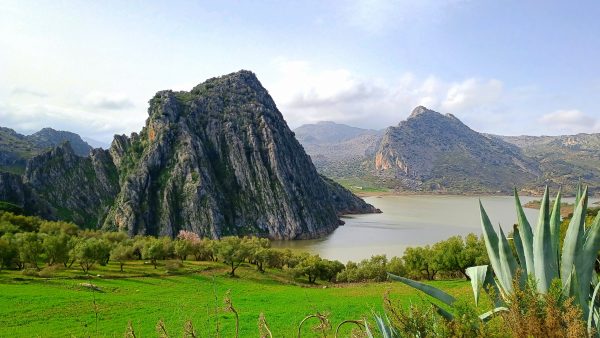
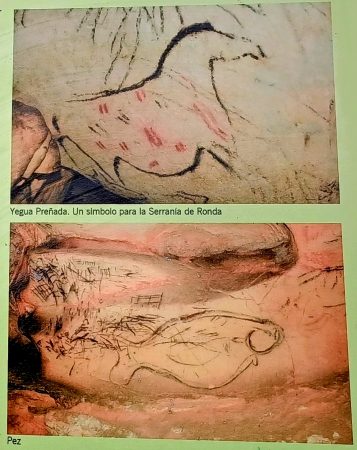
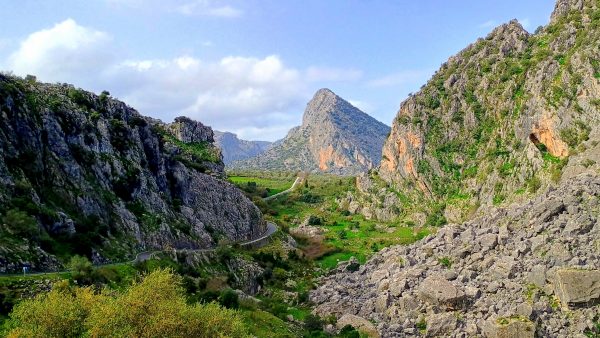
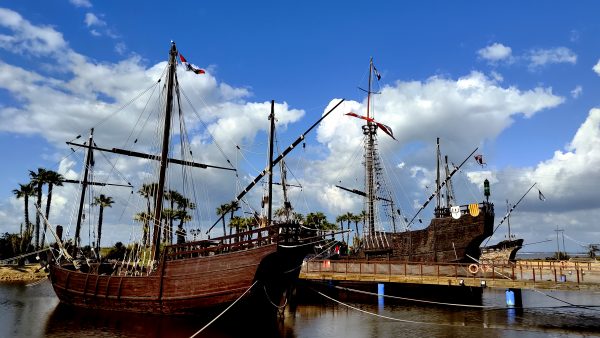
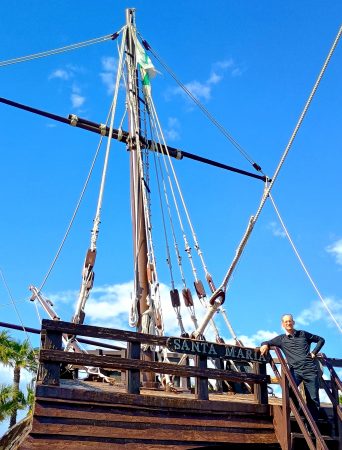
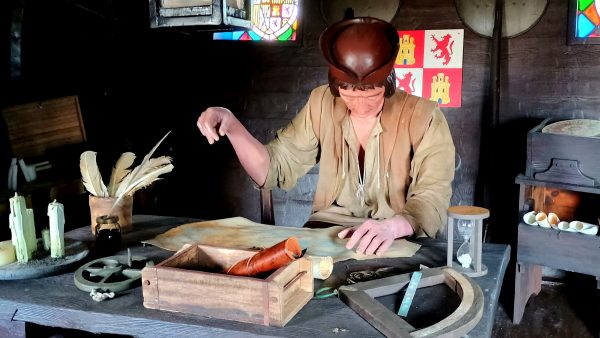
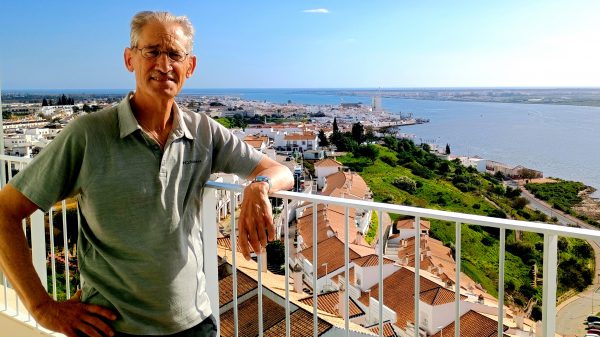
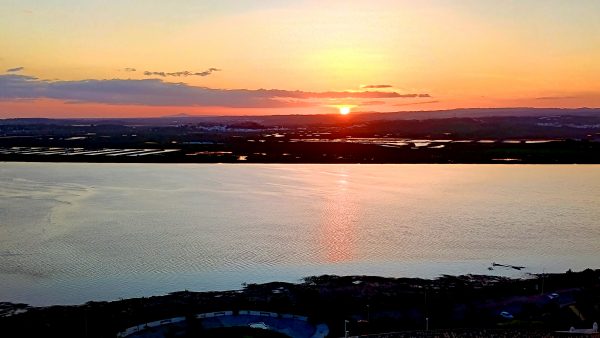
Arcos de la Frontier — a pueblo blanco –is our next region of Spain to explore. These white hilltop towns were originally built for fortification of the Front.Lots of climbing steep hills to experience these beautiful vistas in Arcos.Arcos Lake (reservoir) was pleasant to walk along, join other walkers / joggers and enjoy coffee morning with the locals.We are staying in a townhouse a few miles outside of Arcos on a golf course — we were able to walk miles of the paved hilly cart trails with views!Early morning sun backlights town of Zahara — a spectacularly located Pueblo Blanco — with a castle on the top.A great view of the agriculture countryside from Zahara.The rock outcroppings — in Sierra de Grazalema National Park — have been uplifted and eroded in all sorts unique angles and formations.The region’s karst geologic formations house a spectacularly large cave system which we toured to view the 30,000 year old Pileta Paleolithic Cave Paintings (at Benaojan, near Rhonda).Sierra de Grazalema National Park. WOW! Follow that road from the mountains to the sea…3 Caravels — replicas of the 1492 vessels built to celebrate the 500th anniversary of these ships leaving this harbor to find the spice route to India by sailing west….This is the Santa Maria — its crew was from this region of Spain, near Huelva and the Rio Tinto estuary — flanked by the Nina and the Pinta…Captain Christopher Columbus plotting the course with his map. His route found land –not the spice route to India — and changed the history of the Americas.Ayamonte Parador — on the east bank of the beautiful Guadiana River — is our last night in Spain. That’s Portugal across the river.Enjoying the sunset from our balcony in Spain as it sinks over Portugal — our destination for the remainder of our Iberian travels.
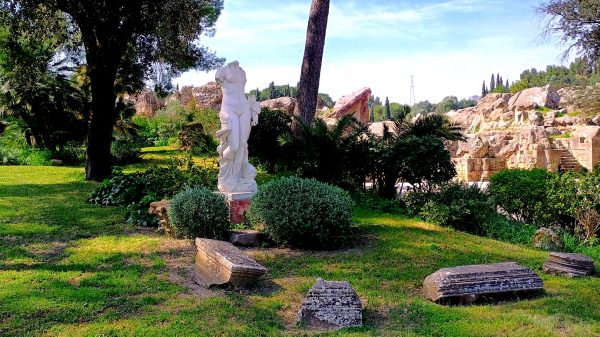
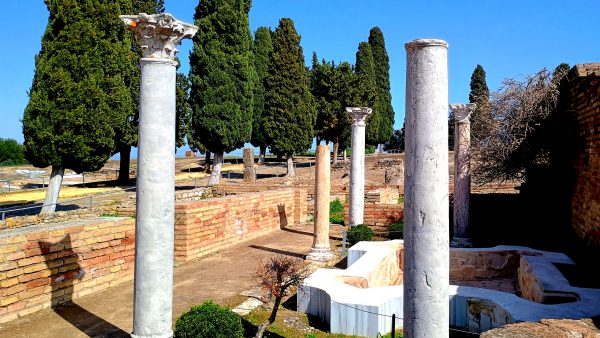
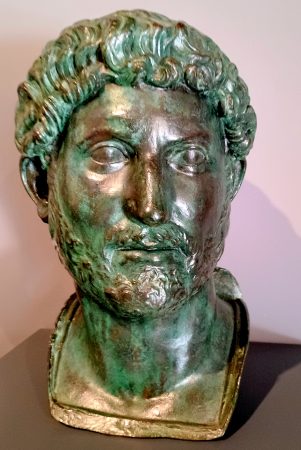
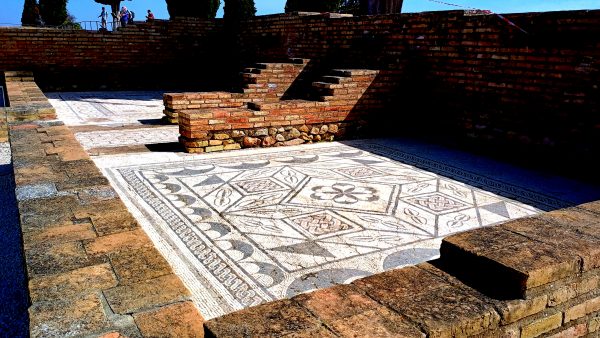
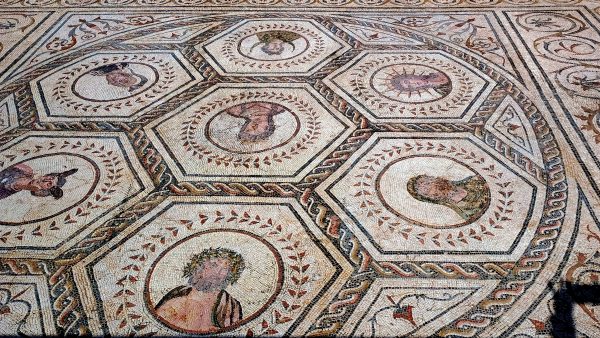
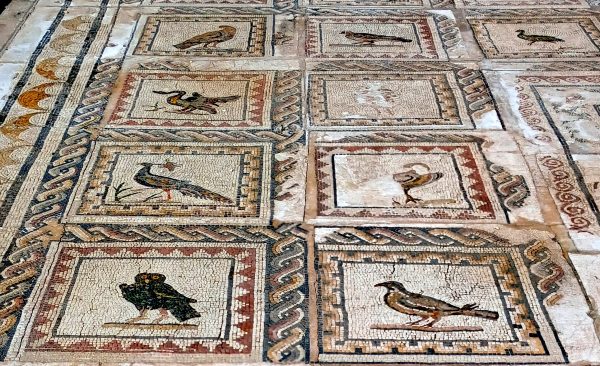
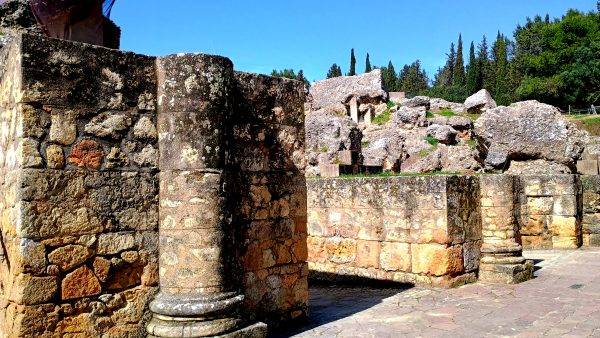
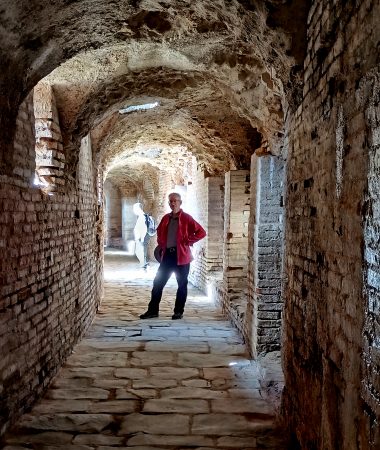
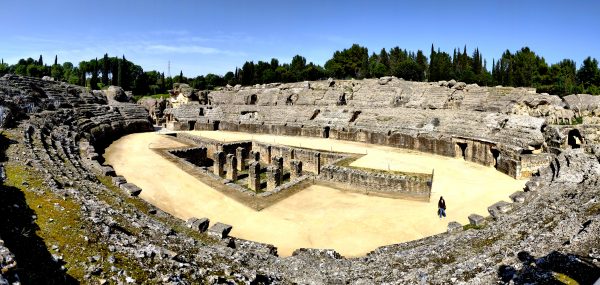
Italica was the first roman city founded on the Iberian Peninsula in 206 BC. Venus is welcoming us on a warm sunny afternnon.It was the birthplace of emperors Trajan (53-117CE) and Hadrian (76-138 CE) — as well as many senators — this city was important to the Romans and well maintained in ancient times.Hadrian, born to a senator — was probably the most educated of all emperors — focused on protecting, promoting and enriching life in all the Roman empire cities like revitalizing Italica his home town. We were wondering maybe Volubilis in Morocco also?This area was quite wealthy and had many mosaics like these in the upper baths.The House of the Planetarium had this incredible floor mosaic representing the 7 days of the week (circa 150 CE). The celestial bodies that changed position in the sky are clearly depicted. They include the Sun, Moon and the 5 planets visible with the naked eye: Mars, Mercury, Jupiter (in front as he is the main roman god), Venus (center of floor, protector of love), and Saturn.House of the Birds — with exquisite details of 30 bird variety, expertly rendered.We follow the wonderful stone walls to the Amphitheater.The corridors under the seating have been well preserved and we get a sense of their height as well as their curving length. Italica Amphitheater.What a panorama view of the Italica Amphitheater — imagining seating in the stands enjoying all sorts of events from this vantage point along with 25,000 other spectators!
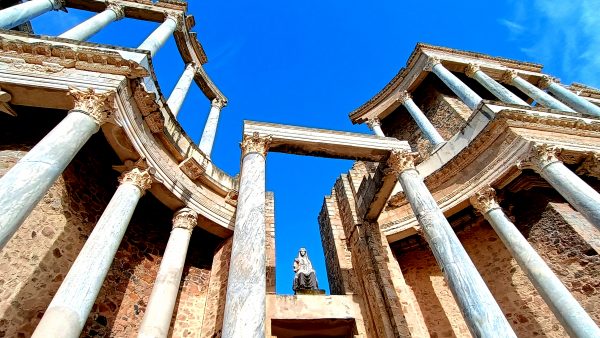
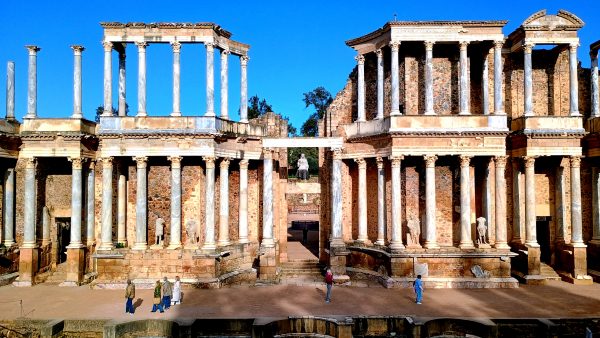
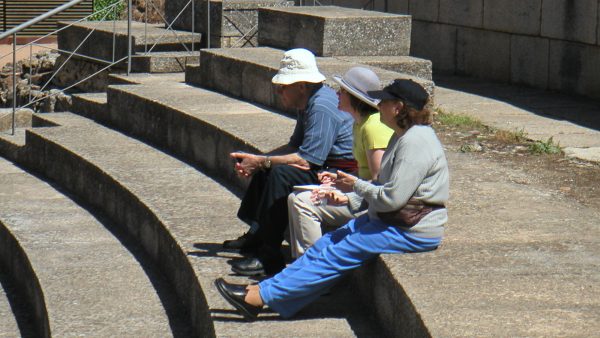
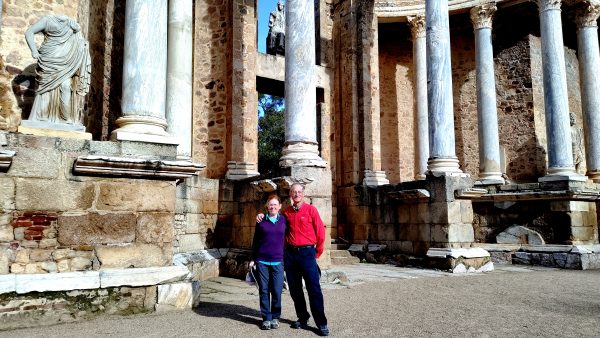
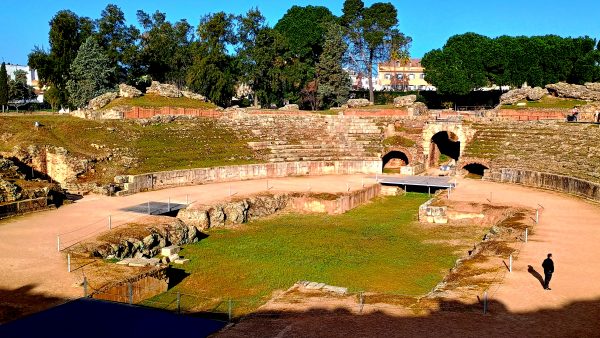
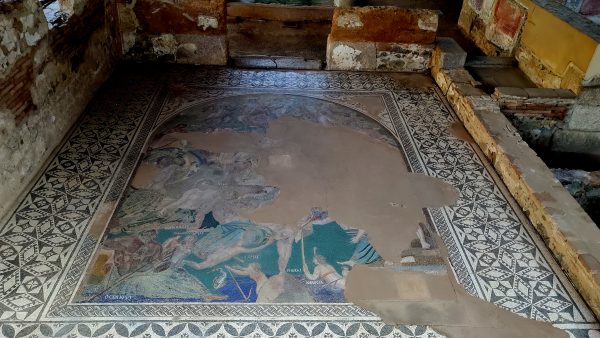
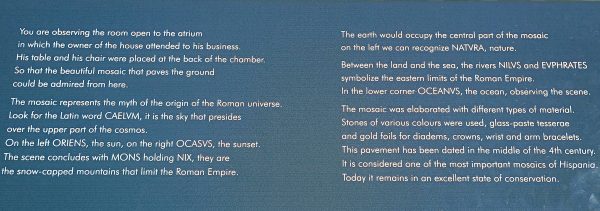
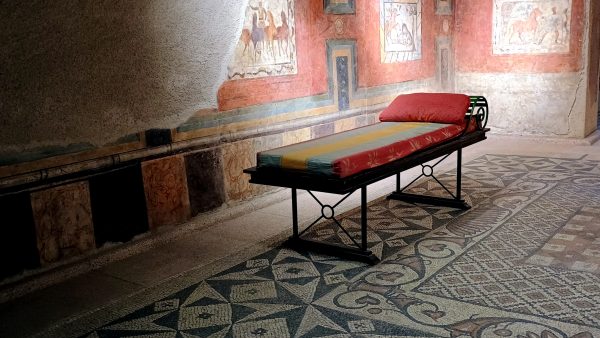
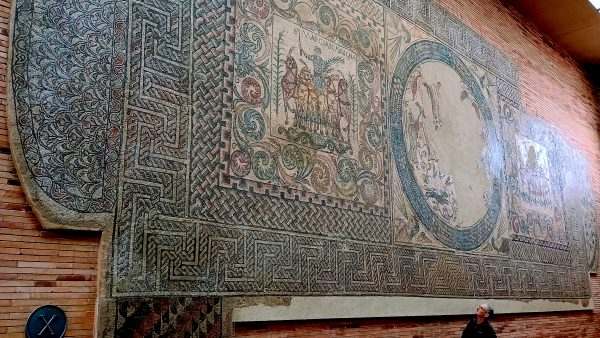
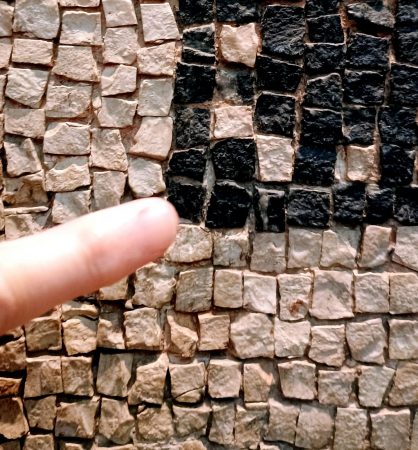
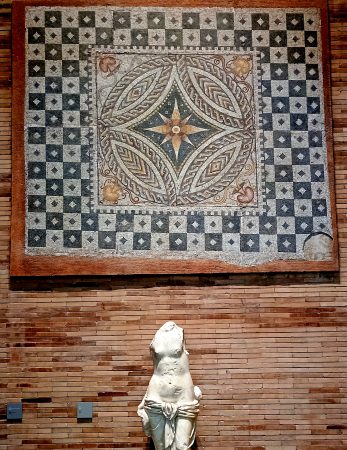
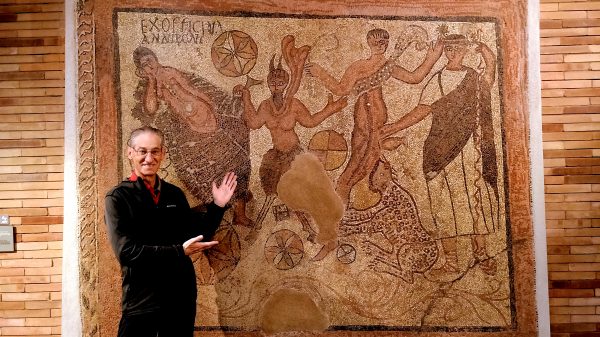
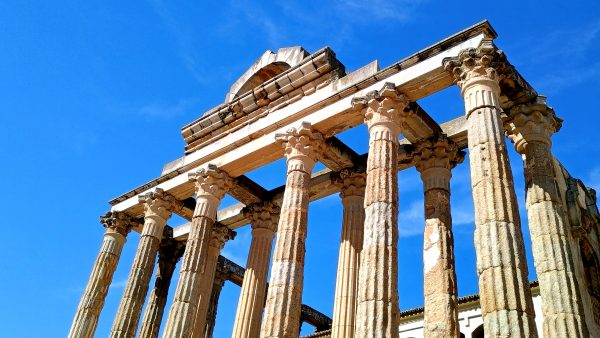
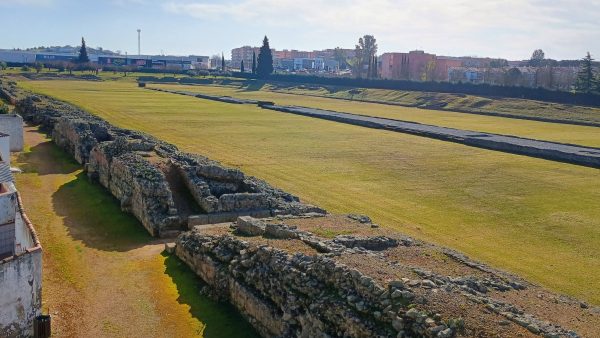
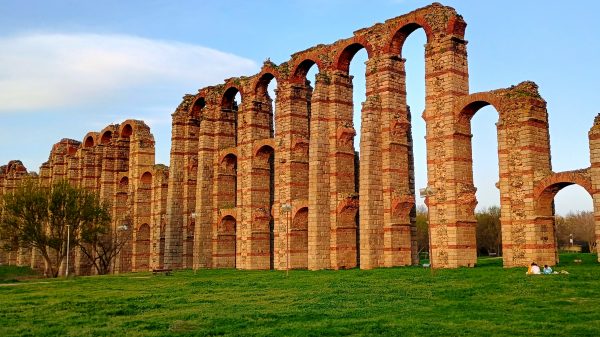
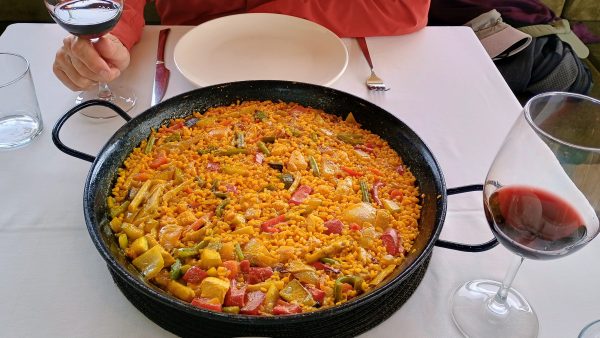
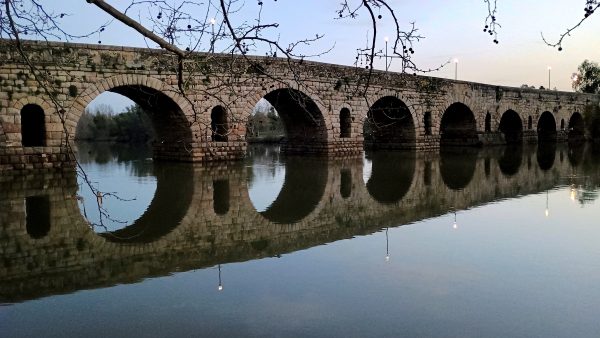
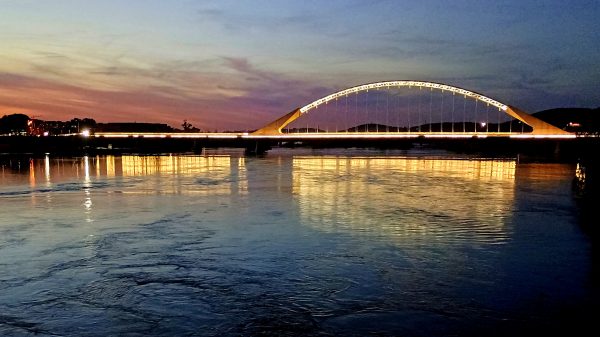
Mérida! Extramadura Spain! What a beautiful day to enjoy with the goddess Ceres looking down on us as she has for centuries. Mérida was established by emperor Augustus in 25 BC as Augusta Emerita where veteran soldiers (emeritus) settled, it grew and became the capital of the Roman province of Lusitania.The Roman Theater is still in use today and has amazing acoustics. Mérida is now the capitol of the province of Extramadura in western Spain.Here we sit way back in May, 2004. It was nice to return and remember our adventures we had with our family.This time we were photographed by other tourists.The adjacent Roman Amphitheater is well preserved and the display boards explain all the different types of events that were presented here — like the gladiators.Very close by is the Casa del Mitreo which had this mosaic of the myth of the origin of the Roman universe. More detail is explained in the next photo……The mosaic is dated to around 350 CE and is considered one of the most important of Hispana. It is nice to see it in context of its atrium and how well it is preserved.The National Museum of Roman Art in Mérida was fantastic. This room has been reassembled and gives a good idea of the interior decor. The beds were used for dining — you stretched out so you could eat more and doze without having to move — How WOW was that idea!This was the largest mosaic we saw — mind boggling — yes that is me at the bottom of the image. It is about chariot drivers which is something we learn more about at the nearby Circus. National Museum of Roman Art MéridaWe could get our nose right up to see the details — the actual size of all the pieces of stone are about the size of your fingernail.Original statues preserved along with the relocated mosaics. National Museum of Roman Art MéridaVery playful. Every time there is new construction in Mérida, history is uncovered and many bits have been preserved here in the museum if not in situ. National Museum of Roman Art MéridaJust a walking down the street — OH, is that the Temple of Diana? It was first repurposed by the Muslims and then later as a church. The more recent modifications in the back of the temple have been historically preserved as well.The Roman Circus! The chariot races symbolized pulling the sun — Apollo. There were 12 gates representing the months of the year (12 teams), 7 laps around the center per race representing the days of the week, and yes, 24 races per event representing the hours of the day. Those Romans were nothing if not detail oriented — everything had a meaning.In a beautiful park like setting is the Roman Acueducto de los Milagros. The aqueduct drew water from a reservoir about five kilometers from the city. It is a miracle that it is still standing after all these years!Yes we are in Spain!!! Paella!!! Delicious!!! Enjoyed this lunch at La Milanesa Restaurante — recommended by the owner of our fabulous apartment. We parked our Renault Clio in the apartment garage and walked everywhere. YEA, No Drive Days!There is a 2000 year history to this Roman Bridge over River Guadiana — now for pedestrians (we used it to walk to the restaurant above) and with parks on both sides of the river.We appreciated the sunset view from the Roman bridge of the 1991 Lusitania Bridge — designed by Santiago Calatrava. Mérida is a wonderful place to visit and we are happy we returned.
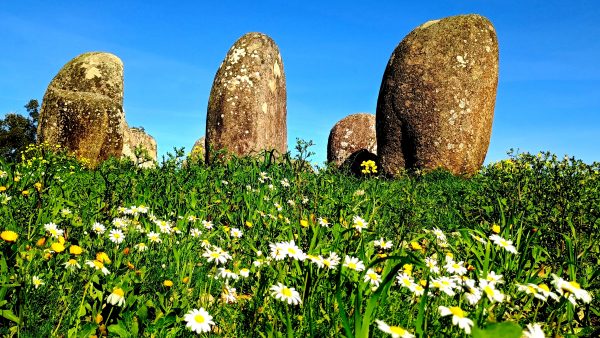
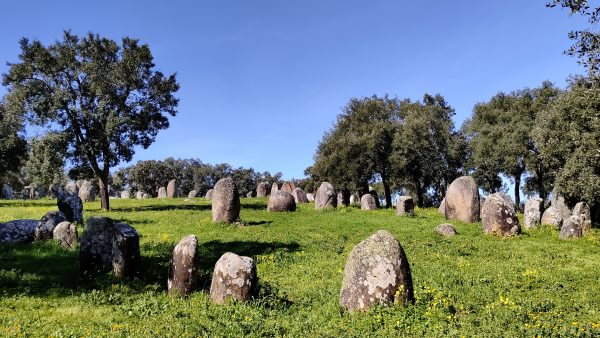
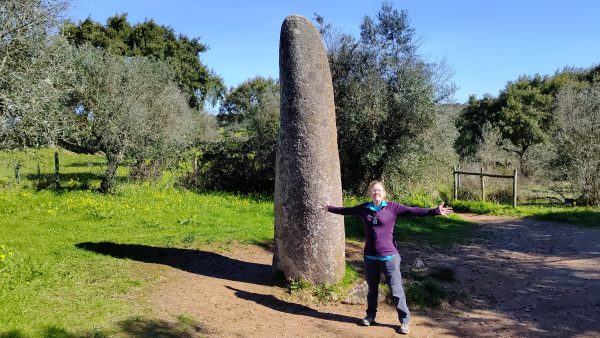
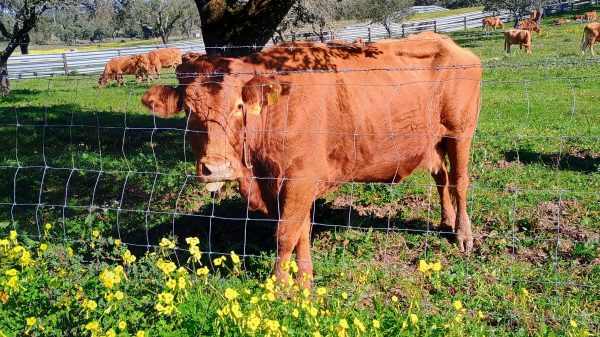
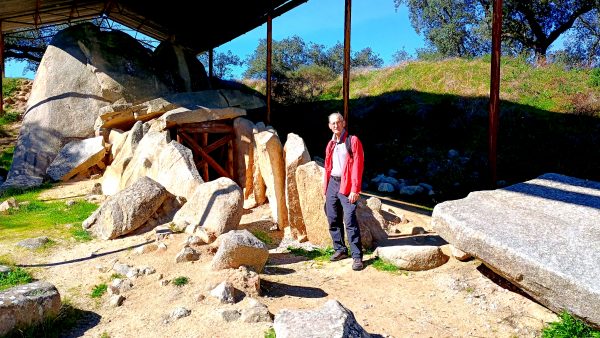
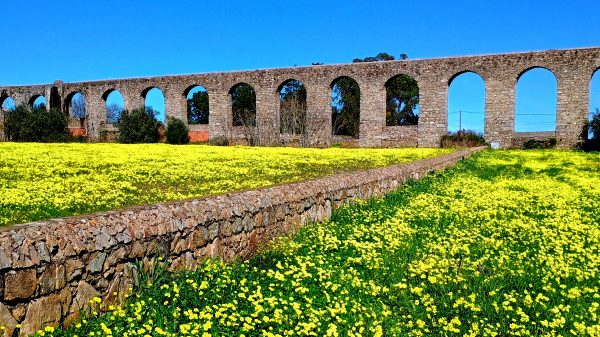
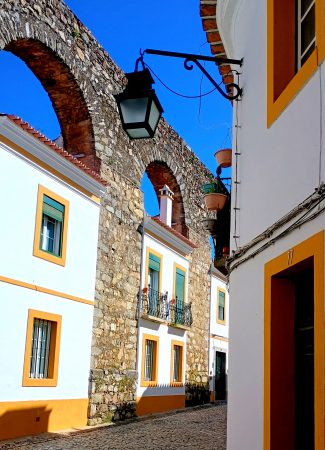
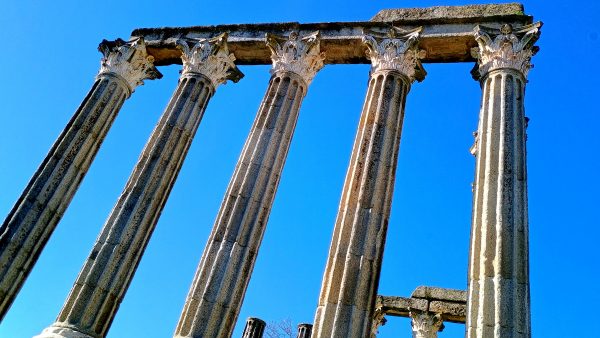
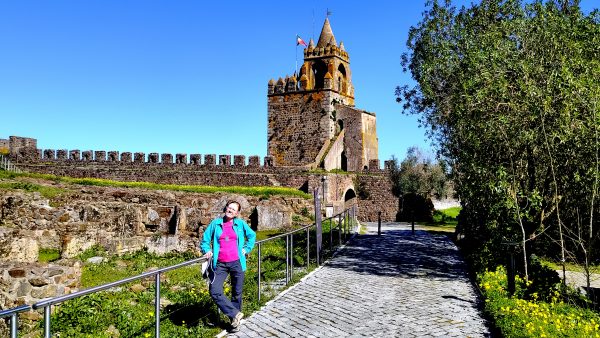
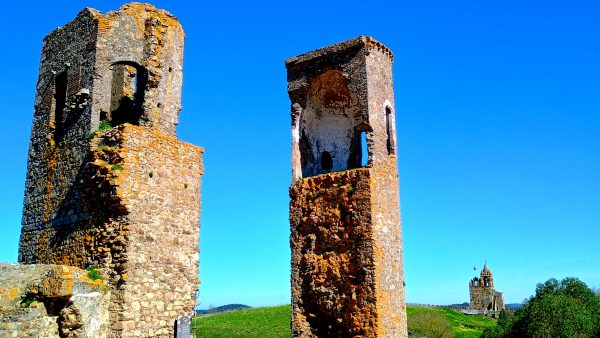
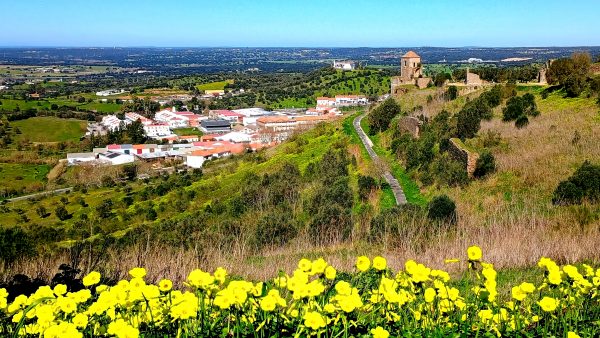
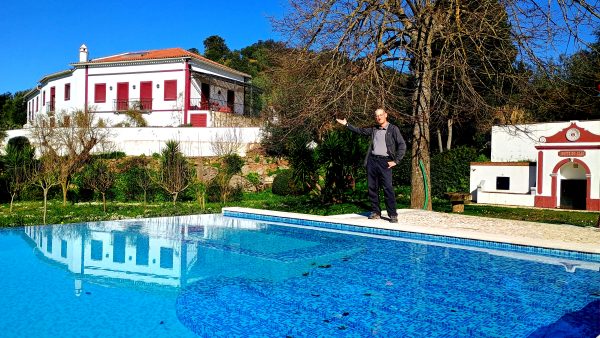
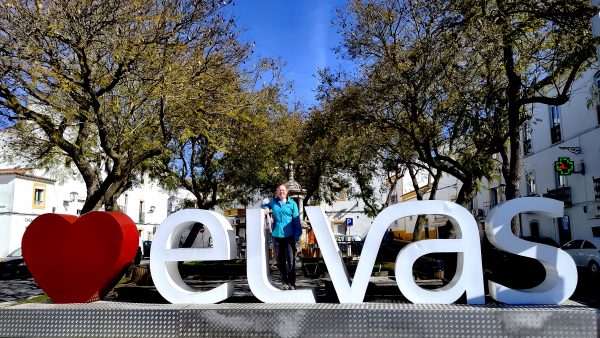
Cromeleque dos Almendres is the largest Megalithic monument in the Iberian peninsula — around 7000 years old — 2000 years older than Stonehenge. A pleasant sunny spring day to visit.There are 100 monoliths stones that comprise Cromeleque dos Almendres. The high position on a hill allows for astronomical sightings and tracking the annual movement of the sun.About 2 km away is this Menhir dos Almendres — positioned to align with the sun at summer solstice from the larger Cromeleque site.‘Hello Cow’ — she is loving the flowers on the other side of the fence! Our 7.5 mile hiking round trip took us through farm lands and gorgeous cork oak tree forests.At 19.5 feet in height, those stones in back make this the tallest Megalithic Dolmen found in the world — Anta Grande do Zambujeiro. This is a funereal monument — thought to be 6000 years old — with its long corridor facing the rising sun on the summer solstice.Roman Aqueduct — Evora — in all its spring glory! So many yellow clover flowers took our breath away.Whitewashed houses built between the Evora Roman Aqueduct. The Portuguese tradition of using yellow around doors and windows is often linked to warmth, hospitality, and a sense of joy.Evora is preparing to be the European Capital of Culture in 2027. We enjoyed walking the town, the local museum, coffee on the square and this Roman Temple.Castle of Montemor-o-Novo is on the highest hill — naturally. It received charter in 1203 but was probably built on a Muslim Moor site that was built on a Roman site.Montemor-o-Novo Castle was the venue of the ‘Cortes of 1495’ (a state assembly) during which Manuel I of Portugal decreed to send Vasco da Gama, born in this region, to discover a sea route to India.Montemor-o-Novo is in the fertile Alentejo valley. A very nice place to have as a home base for a few days.Quinta Da Asneira is an estate, divided into 5 apartments, but we and the sheep are the only ones enjoying it now! Our very own country Villa in Montemor-o-Novo.An Elvis sighting!!! We enjoyed a morning walk around this town — the medieval fortifications, cafe and pastries by the plaza, the sunshine — on our drive to Spain.The beauty and history in central Portugal has charmed us. We can see the influence of the Moors more clearly after our time in Morocco — such an integral part of the history in this region.
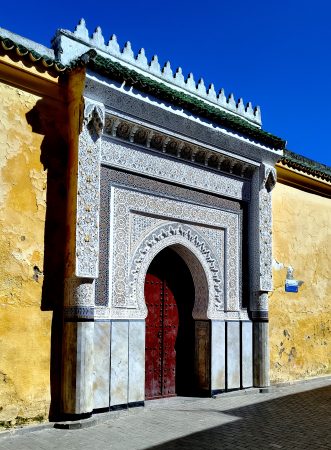
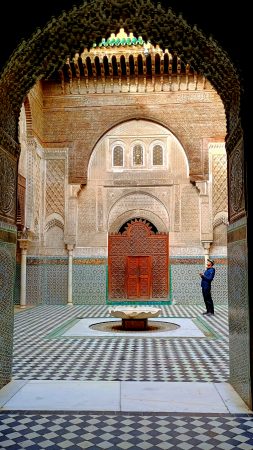
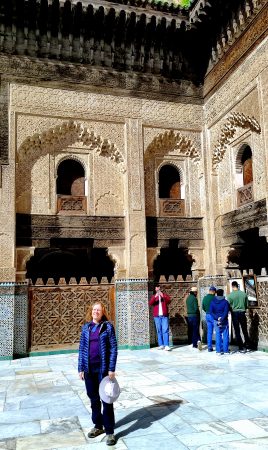
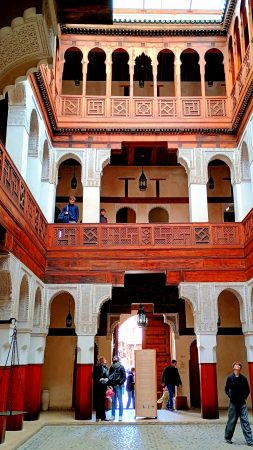
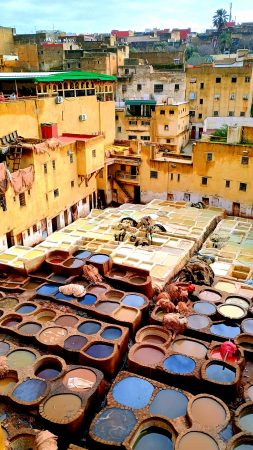
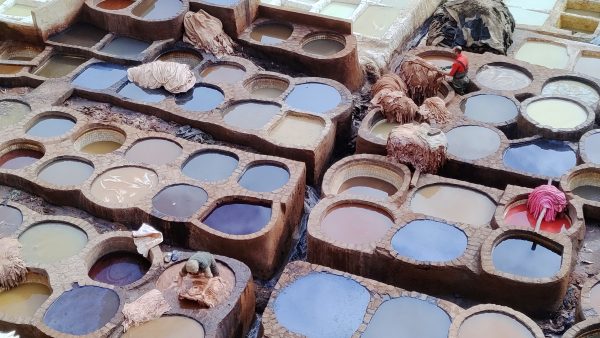
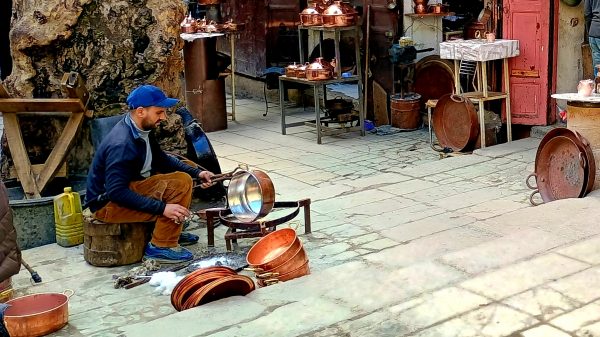
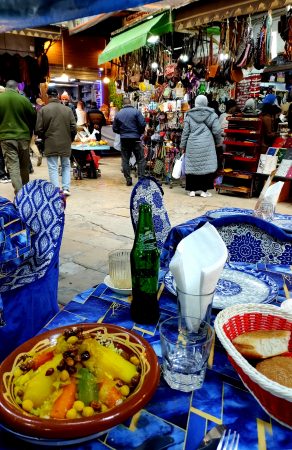
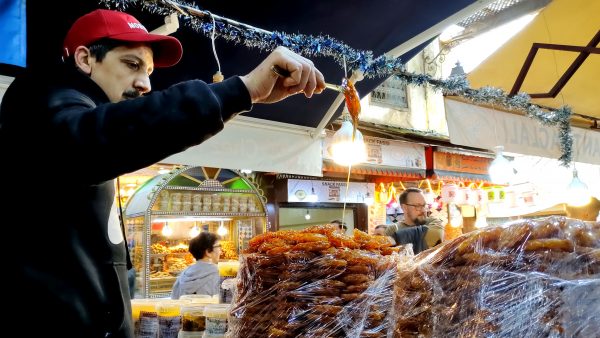
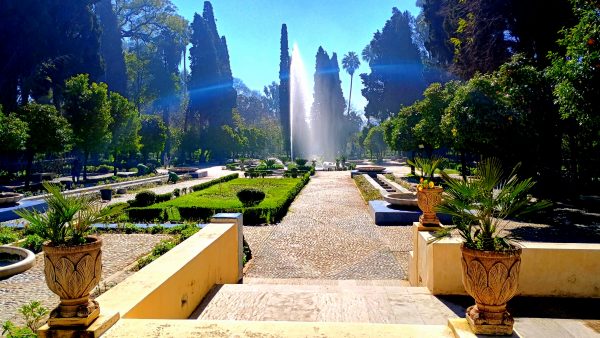
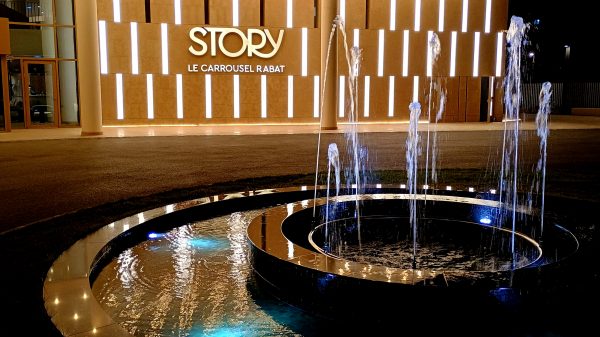
We are back to the big city: Fes, one of the oldest imperial cities, was named a UNESCO World Heritage site in 1981. We are ready to explore the el‑Bali’s medina.A wonderful school built in 1670 — El-Cherratine Medersa — mesmerized us as it has hundreds of Koranic scholars with all of its intricate details.Another school for Islamic scholars built in 1350–55 — Bou Inania Medersa — is one of the most impressive in the Morocco.Fondouk el-Nejjarine constructed in 1711 as a bustling caravanserai — a combined overnight Inn and Warehouse for merchants. The three-story courtyard with cedar wood and stucco — traders securely stored their goods and animals on the ground floor and stayed in the upper levels — is now a wood craft museum.Chouara Tannery — one of the most famous, the oldest and largest Fez Tannery — has been around for 1000 years!We are given a mint leaf to hold to our nose to conceal the odors but that gives us an appreciation of what these men working in the tanning vats are enduring — in the intense sun and hip waders. The leather produced is world famous for its softness and beautiful colors.Also in the medina we find the Coppersmith. He is applying a silver powder to the inside of this copper vessel — making it sparkle, smooth and usable.We stopped for lunch and for some people watching at a Tajine restaurant in the medina. So good we went back for a second time a couple days later!While eating we saw why these deserts are all soooo… good! Honey is drizzled on top of them — lots and lots and lots and lots — so the pastries just soak it up. Good thing Pooh Bear isn’t here!Next to the royal palace are the Jardins de Bou Jeloud – a beautiful green oasis in the busy city.The end of the ‘Story’ — Hotel in Rabat before our departure. ‘Out of Africa’ … Morocco has been a delightful experience with much variety of landscapes, culture, and food. The number one take away is the friendliness of the people which is unsurpassed.
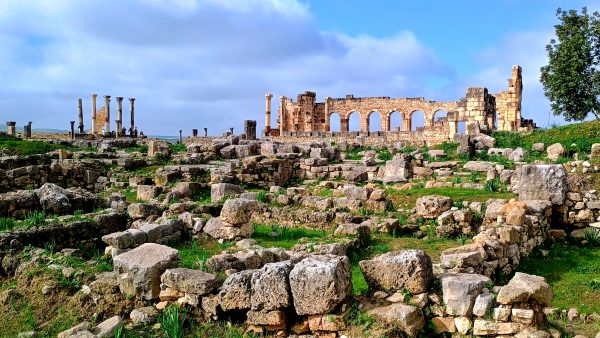
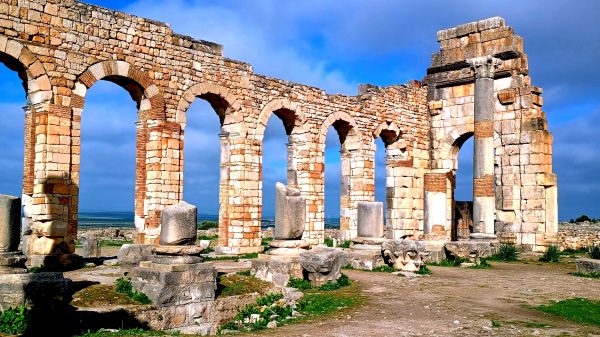
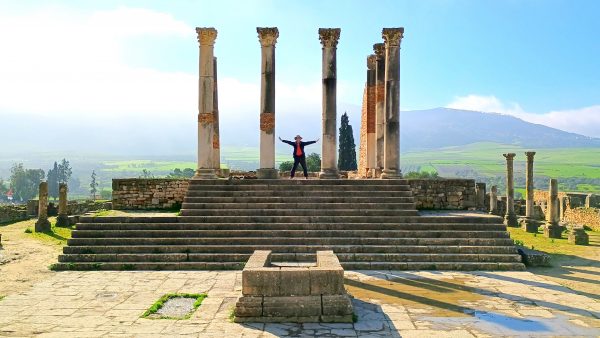
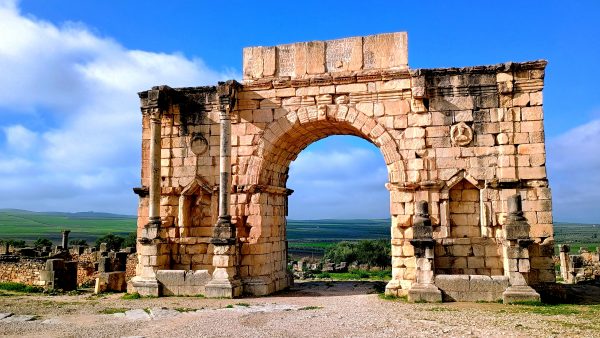
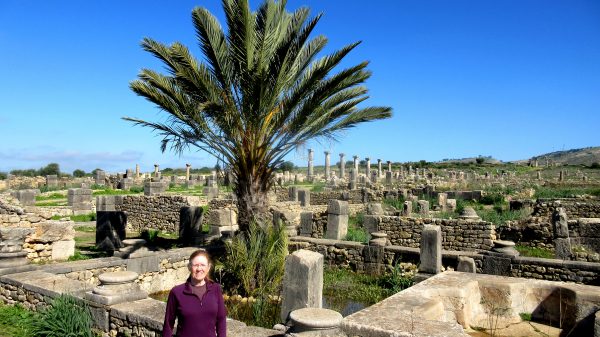
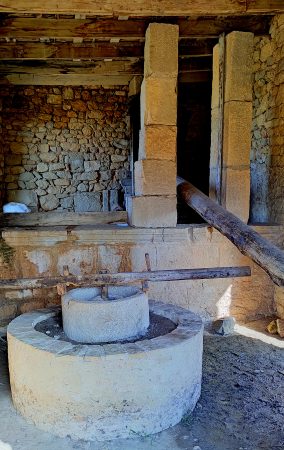
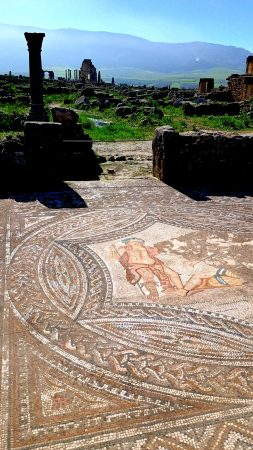
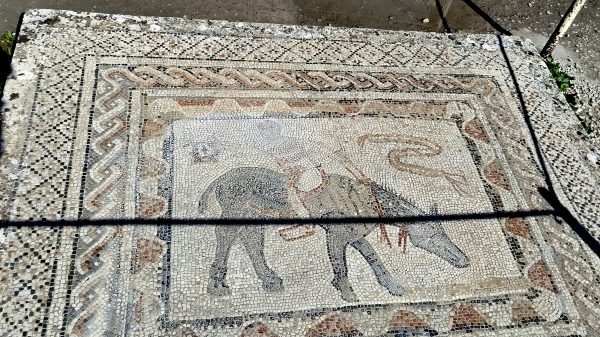
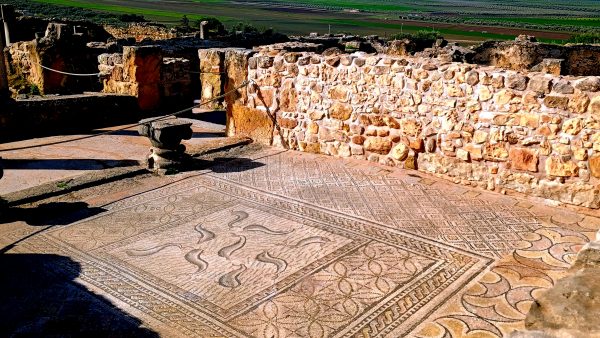
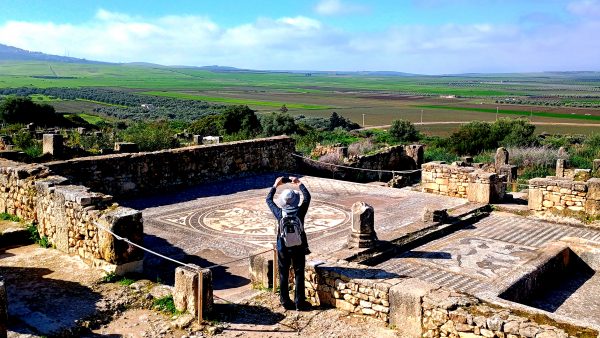
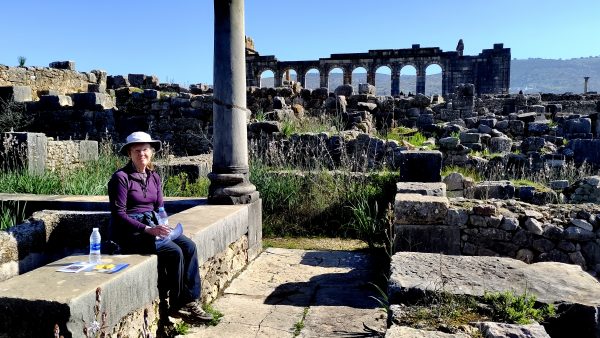
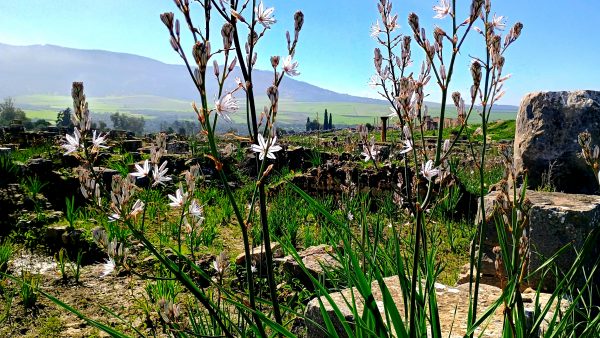
Volubilis was first established by the Romans in the 3rd century BC — supported 20,000 inhabitants. It is on a hill with a comprehensive view in all directions.The Roman Basilica is most prominent as a partially restored grand structure.There is a lot of room to stretch in the Capitoline Temple — dedicated to Jupiter, Juno, and Minerva. 13 steps to the massive Corinthian columns… ‘I rule all that I see!’Triumphal Arch, built in AD 217, to honor Emperor Caracalla, overlooks the fertile agricultural plains — one of the main reasons the Romans chose this site.The House of Venus — once the most opulent house in Volublis — with a palm tree in the garden. This city is huge as you can see.This all important olive oil press was restored and is similar to those used for many millenniums.We were very excited to see all the mosaics. This beautiful incomplete one is of Dionysus — located in the House of the Knight.Look at the detail in this mosaic! Called: House of the Athlete.This mosaic was really unique and titled the Nine Dolphins –symbolizing good luck.The photographer is capturing the mosaic of Orpheus, charming the animals with his lyre.We found a quiet spot to take a break and contemplate all that we had seen.And enjoy the spring flowers — maybe these are a native white asphodel. Maybe the Romans encouraged the Asphodel Meadows after they read Homer’s Odyssey…
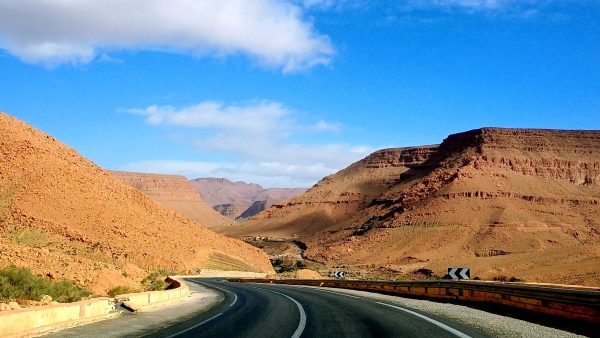
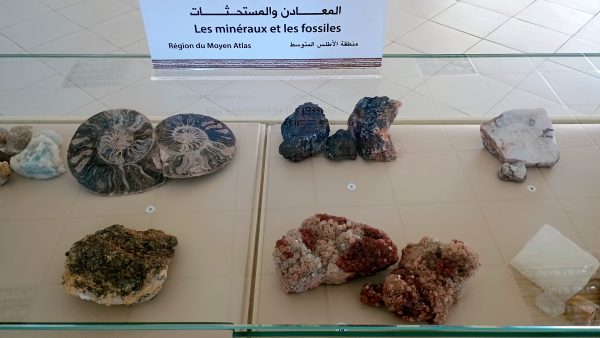
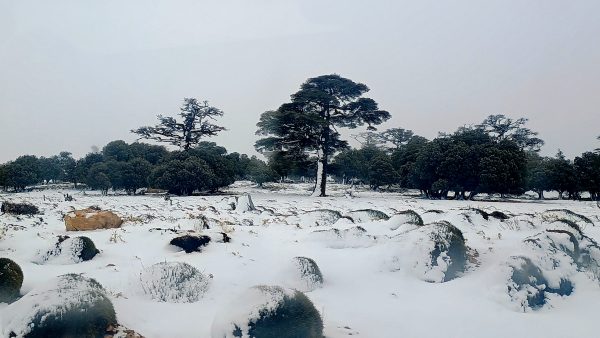
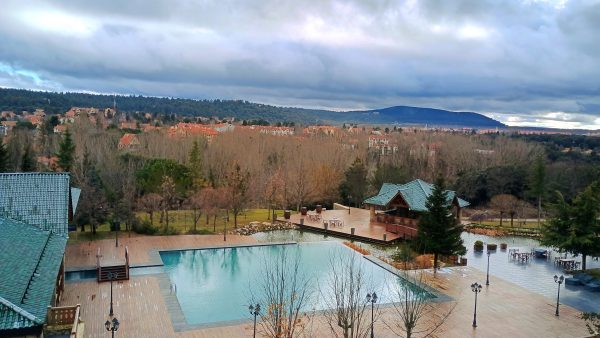
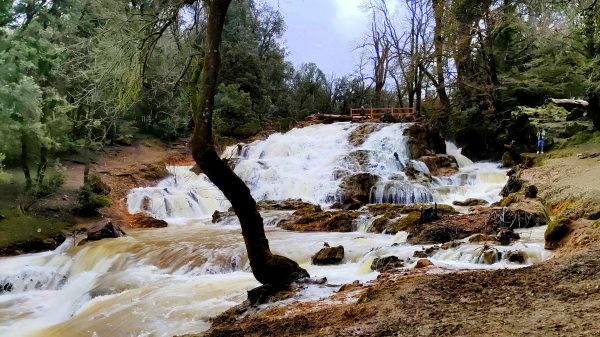
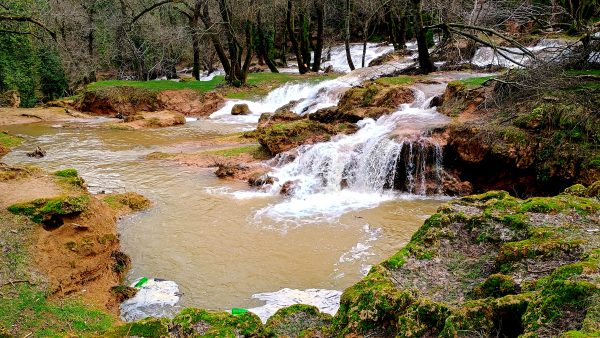
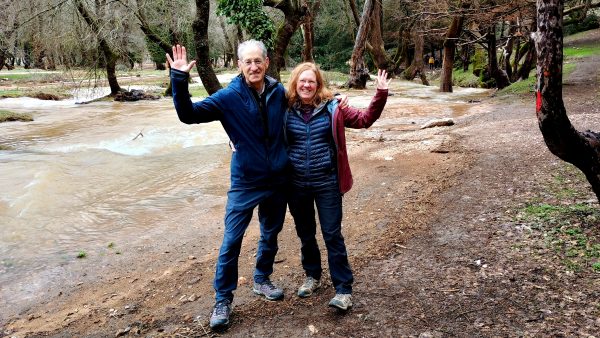
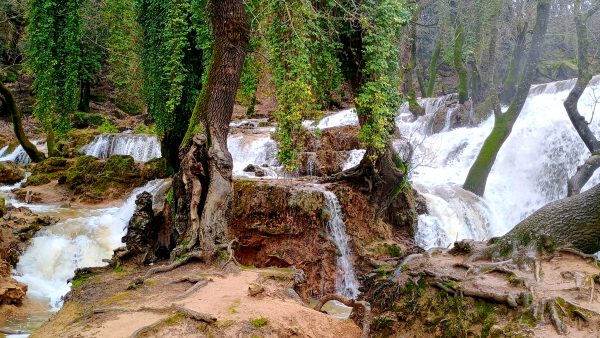
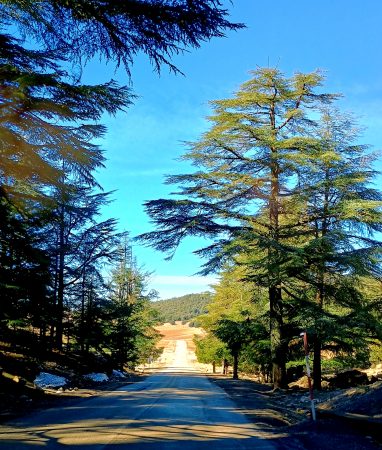
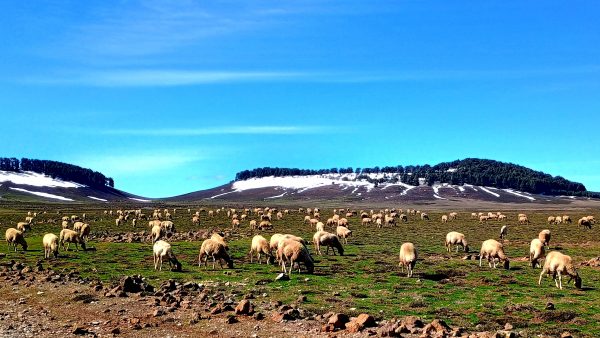
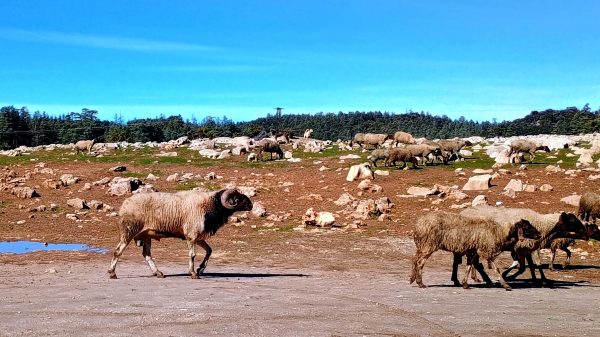
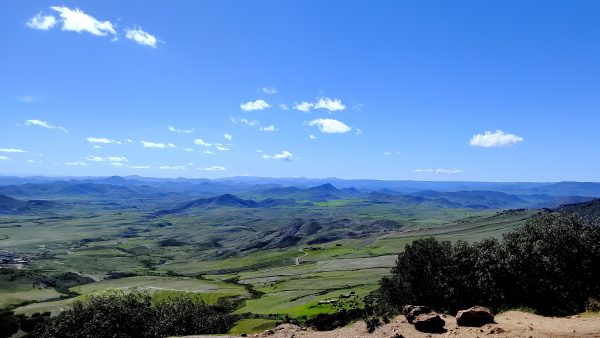
We leave the Sahara behind and head north through the breathtaking Ziz Gorge towards Fes. It brought to mind the canyons of the southwest USA.This southern area is very rich with fossils – we felt like we were driving through the Tucson Gem and Mineral show.And then there is snow in the Middle Atlas Mountains! Imagine in the past 7 hours we went from the Sahara, thru Morocco’s Grand Canyon and apple orchards, to the snow covered forest — what a diverse landscape.We had a rainy day in Ifrane but enjoyed a Resort lifestyle. This is dubbed the Switzerland of Morocco.Ifrane National Park with overflowing waterfalls — beautiful Cascades des ViergesThe waterfalls are all quite breathtaking.Next to the river, we met some locals and swap photo ops.Wow. The power of water! This side of the mountains seems to get a lot of moisture.Nearby towards Azrou, we head through Cedre Gouraud Forest NP. The cedar trees are very majestic.There were a lot of sheep — more than we have seen anywhere else — near Azrou & Cedre Gouraud Forest NP.Of course there is the proud papa Ram strutting with his flock.Outside Azrou, we were on the rim looking over mountains, valleys and fertile fields. We are definitively experiencing a more lush Morocco.