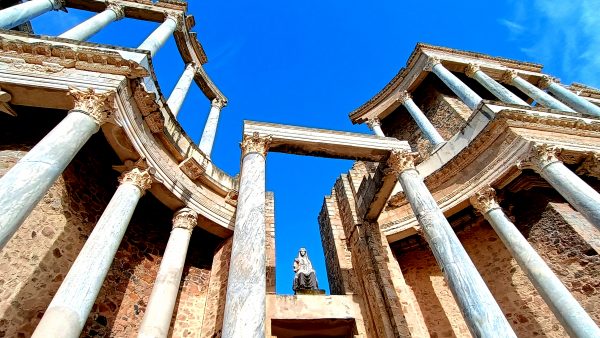
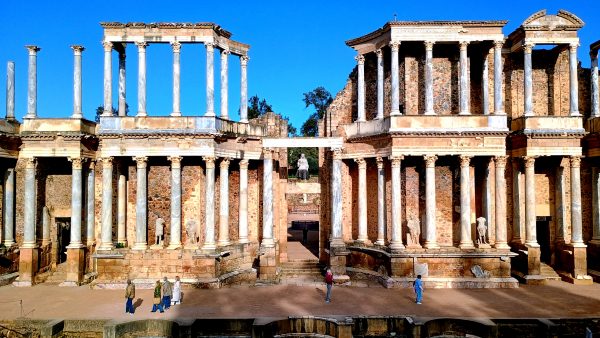
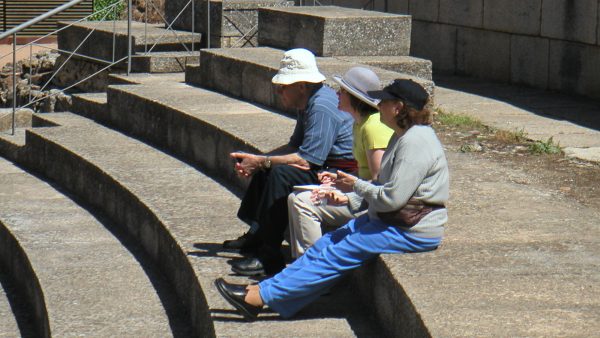
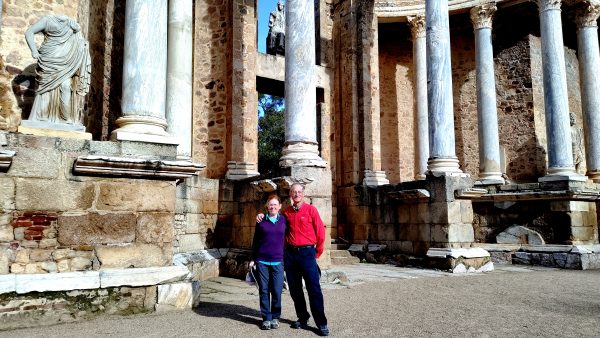
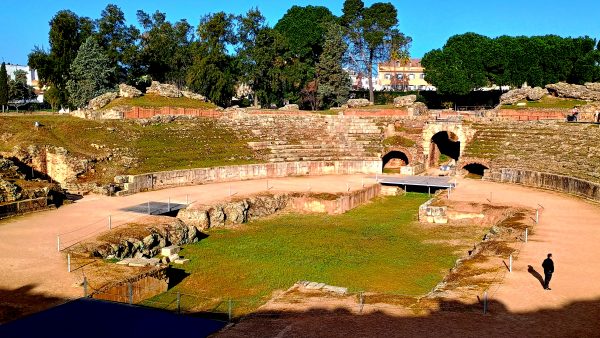
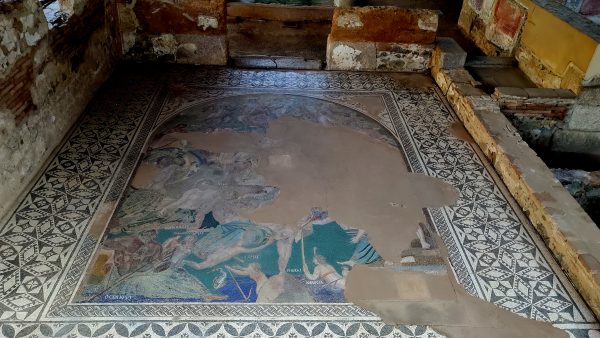
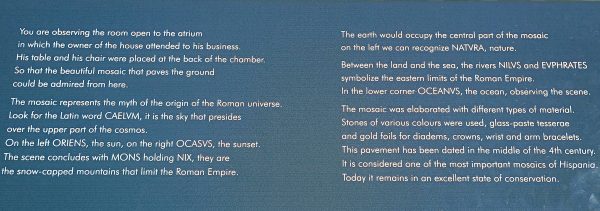
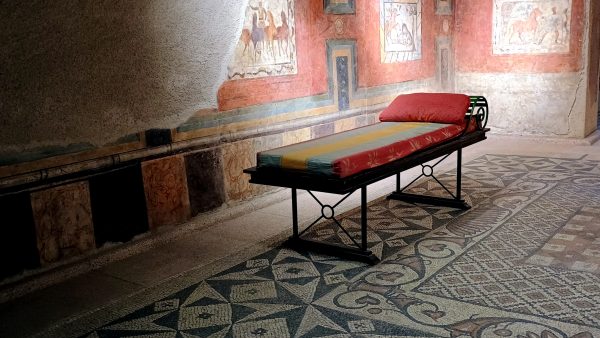
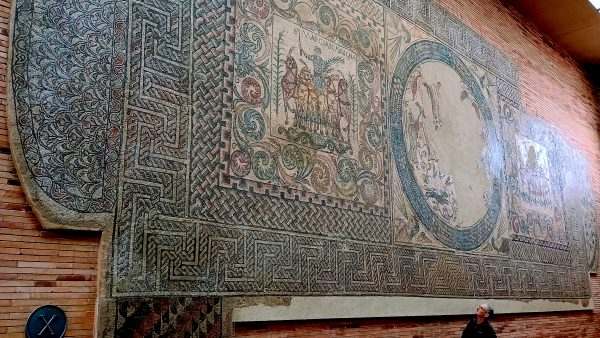
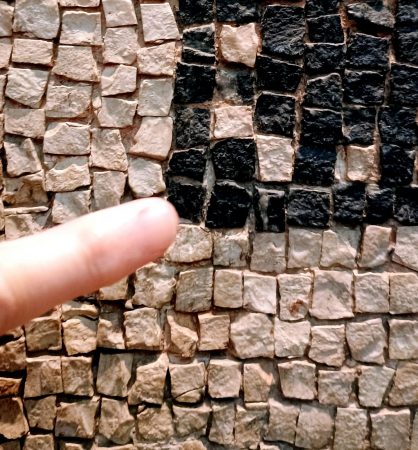
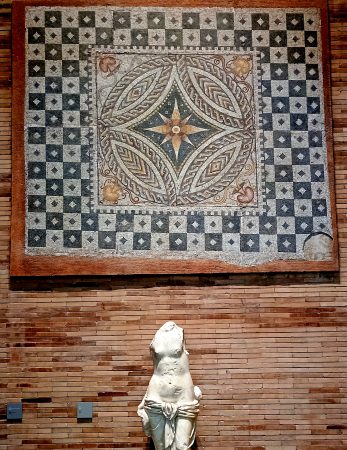
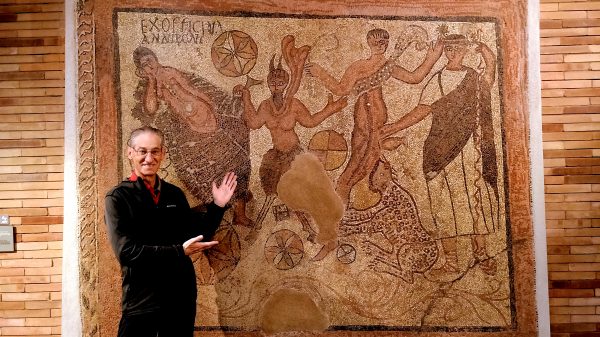
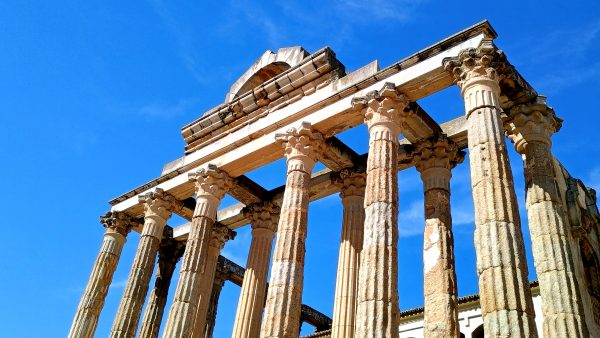
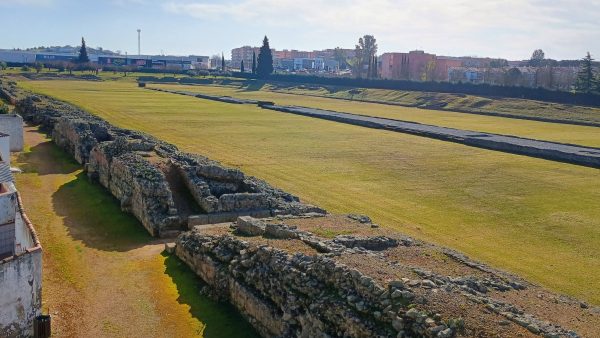
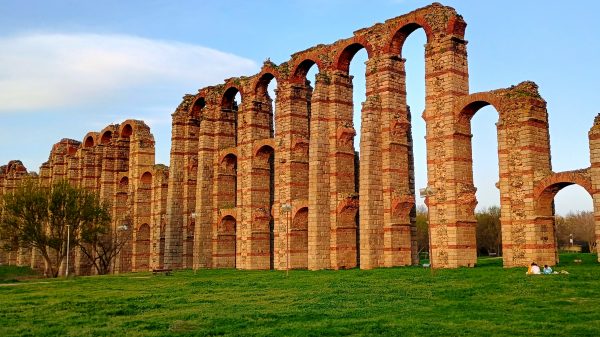
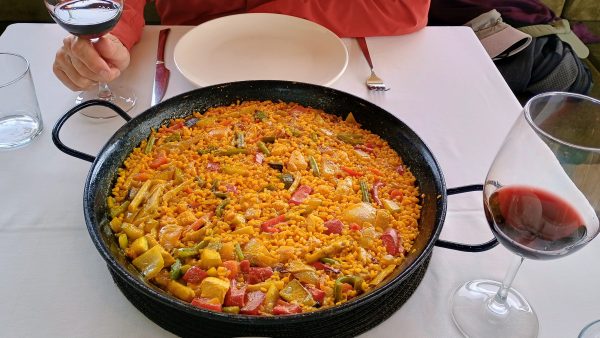
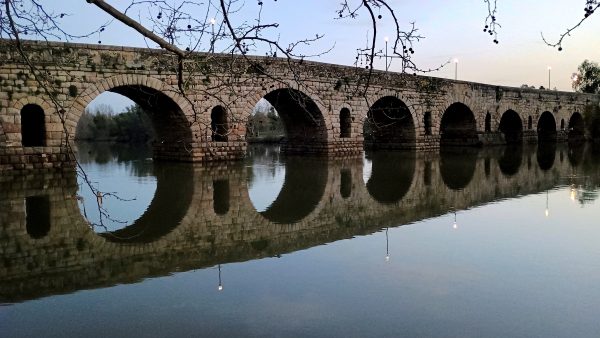
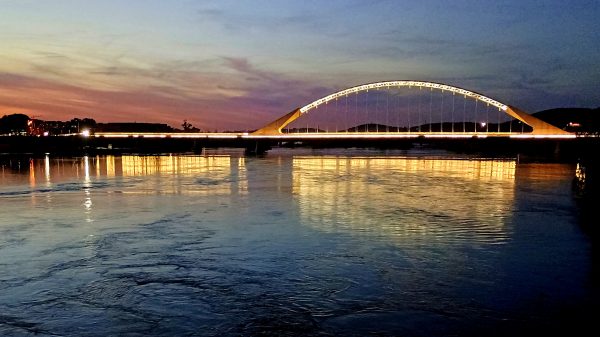
Mérida! Extramadura Spain! What a beautiful day to enjoy with the goddess Ceres looking down on us as she has for centuries. Mérida was established by emperor Augustus in 25 BC as Augusta Emerita where veteran soldiers (emeritus) settled, it grew and became the capital of the Roman province of Lusitania.The Roman Theater is still in use today and has amazing acoustics. Mérida is now the capitol of the province of Extramadura in western Spain.Here we sit way back in May, 2004. It was nice to return and remember our adventures we had with our family.This time we were photographed by other tourists.The adjacent Roman Amphitheater is well preserved and the display boards explain all the different types of events that were presented here — like the gladiators.Very close by is the Casa del Mitreo which had this mosaic of the myth of the origin of the Roman universe. More detail is explained in the next photo……The mosaic is dated to around 350 CE and is considered one of the most important of Hispana. It is nice to see it in context of its atrium and how well it is preserved.The National Museum of Roman Art in Mérida was fantastic. This room has been reassembled and gives a good idea of the interior decor. The beds were used for dining — you stretched out so you could eat more and doze without having to move — How WOW was that idea!This was the largest mosaic we saw — mind boggling — yes that is me at the bottom of the image. It is about chariot drivers which is something we learn more about at the nearby Circus. National Museum of Roman Art MéridaWe could get our nose right up to see the details — the actual size of all the pieces of stone are about the size of your fingernail.Original statues preserved along with the relocated mosaics. National Museum of Roman Art MéridaVery playful. Every time there is new construction in Mérida, history is uncovered and many bits have been preserved here in the museum if not in situ. National Museum of Roman Art MéridaJust a walking down the street — OH, is that the Temple of Diana? It was first repurposed by the Muslims and then later as a church. The more recent modifications in the back of the temple have been historically preserved as well.The Roman Circus! The chariot races symbolized pulling the sun — Apollo. There were 12 gates representing the months of the year (12 teams), 7 laps around the center per race representing the days of the week, and yes, 24 races per event representing the hours of the day. Those Romans were nothing if not detail oriented — everything had a meaning.In a beautiful park like setting is the Roman Acueducto de los Milagros. The aqueduct drew water from a reservoir about five kilometers from the city. It is a miracle that it is still standing after all these years!Yes we are in Spain!!! Paella!!! Delicious!!! Enjoyed this lunch at La Milanesa Restaurante — recommended by the owner of our fabulous apartment. We parked our Renault Clio in the apartment garage and walked everywhere. YEA, No Drive Days!There is a 2000 year history to this Roman Bridge over River Guadiana — now for pedestrians (we used it to walk to the restaurant above) and with parks on both sides of the river.We appreciated the sunset view from the Roman bridge of the 1991 Lusitania Bridge — designed by Santiago Calatrava. Mérida is a wonderful place to visit and we are happy we returned.