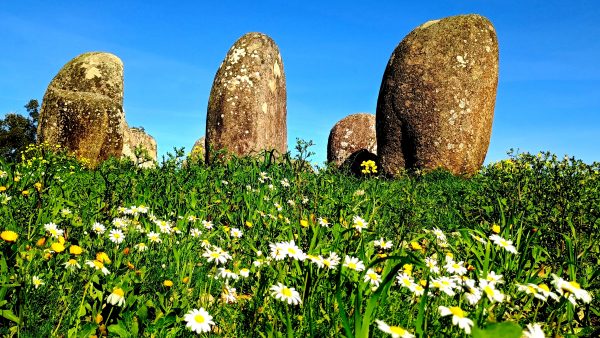
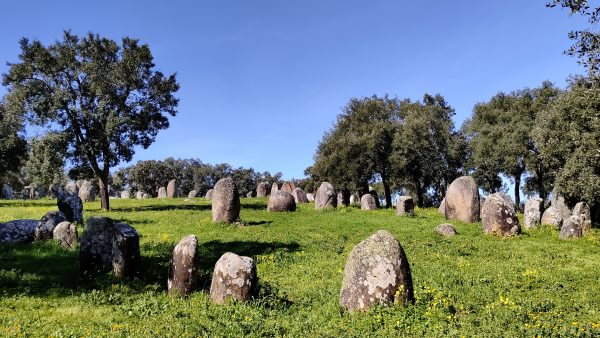
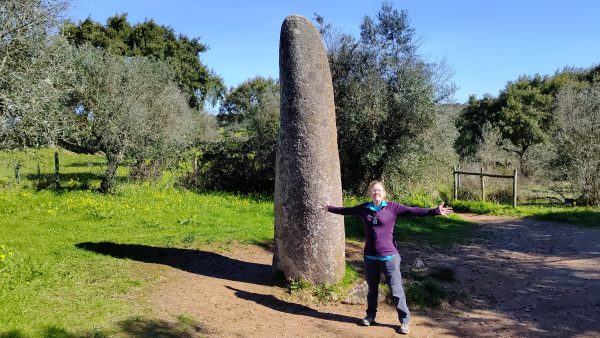
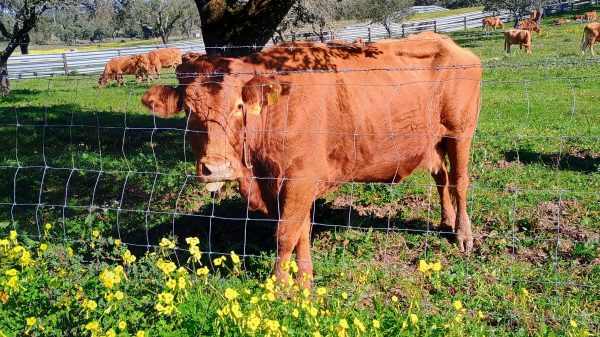
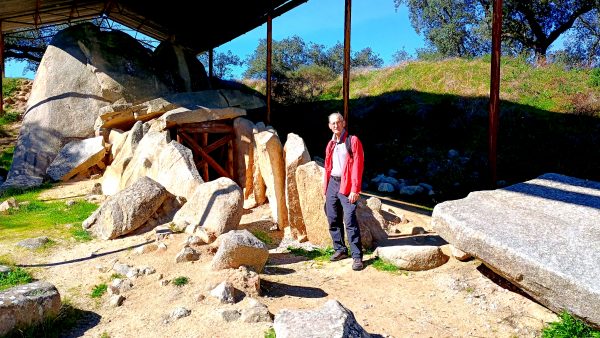
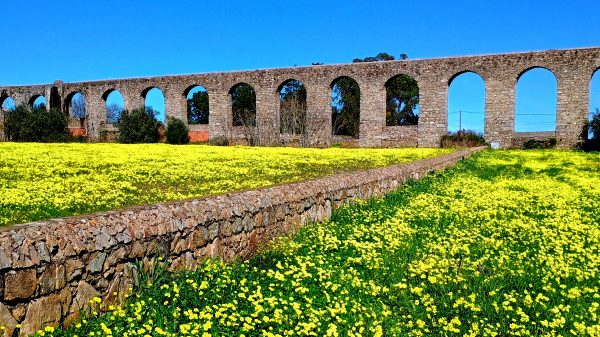
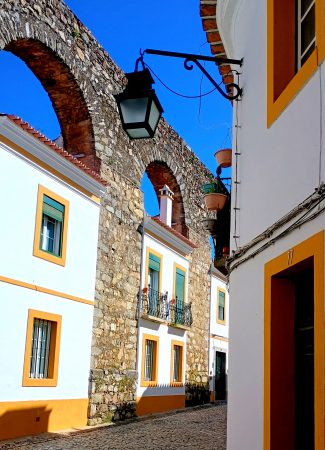
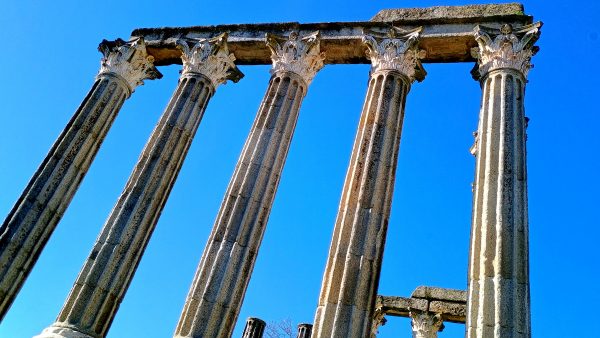
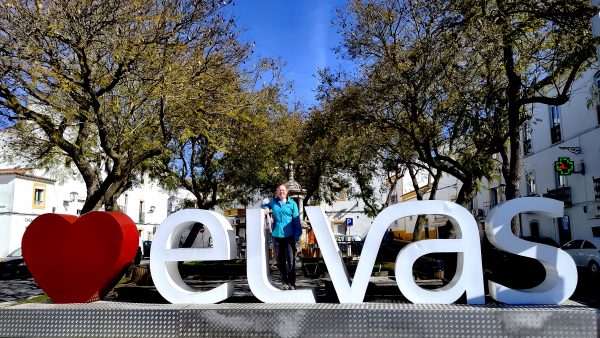
Cromeleque dos Almendres is the largest Megalithic monument in the Iberian peninsula — around 7000 years old — 2000 years older than Stonehenge. A pleasant sunny spring day to visit.There are 100 monoliths stones that comprise Cromeleque dos Almendres. The high position on a hill allows for astronomical sightings and tracking the annual movement of the sun.About 2 km away is this Menhir dos Almendres — positioned to align with the sun at summer solstice from the larger Cromeleque site.‘Hello Cow’ — she is loving the flowers on the other side of the fence! Our 7.5 mile hiking round trip took us through farm lands and gorgeous cork oak tree forests.At 19.5 feet in height, those stones in back make this the tallest Megalithic Dolmen found in the world — Anta Grande do Zambujeiro. This is a funereal monument — thought to be 6000 years old — with its long corridor facing the rising sun on the summer solstice.Roman Aqueduct — Evora — in all its spring glory! So many yellow clover flowers took our breath away.Whitewashed houses built between the Evora Roman Aqueduct. The Portuguese tradition of using yellow around doors and windows is often linked to warmth, hospitality, and a sense of joy.Evora is preparing to be the European Capital of Culture in 2027. We enjoyed walking the town, the local museum, coffee on the square and this Roman Temple.Castle of Montemor-o-Novo is on the highest hill — naturally. It received charter in 1203 but was probably built on a Muslim Moor site that was built on a Roman site.Montemor-o-Novo Castle was the venue of the ‘Cortes of 1495’ (a state assembly) during which Manuel I of Portugal decreed to send Vasco da Gama, born in this region, to discover a sea route to India.Montemor-o-Novo is in the fertile Alentejo valley. A very nice place to have as a home base for a few days.Quinta Da Asneira is an estate, divided into 5 apartments, but we and the sheep are the only ones enjoying it now! Our very own country Villa in Montemor-o-Novo.An Elvis sighting!!! We enjoyed a morning walk around this town — the medieval fortifications, cafe and pastries by the plaza, the sunshine — on our drive to Spain.The beauty and history in central Portugal has charmed us. We can see the influence of the Moors more clearly after our time in Morocco — such an integral part of the history in this region.